
How to Win the Legal Ad Game Without Breaking the Bank
Why Personal Injury Lawyer Ads Are Everywhere (And What Actually Works)
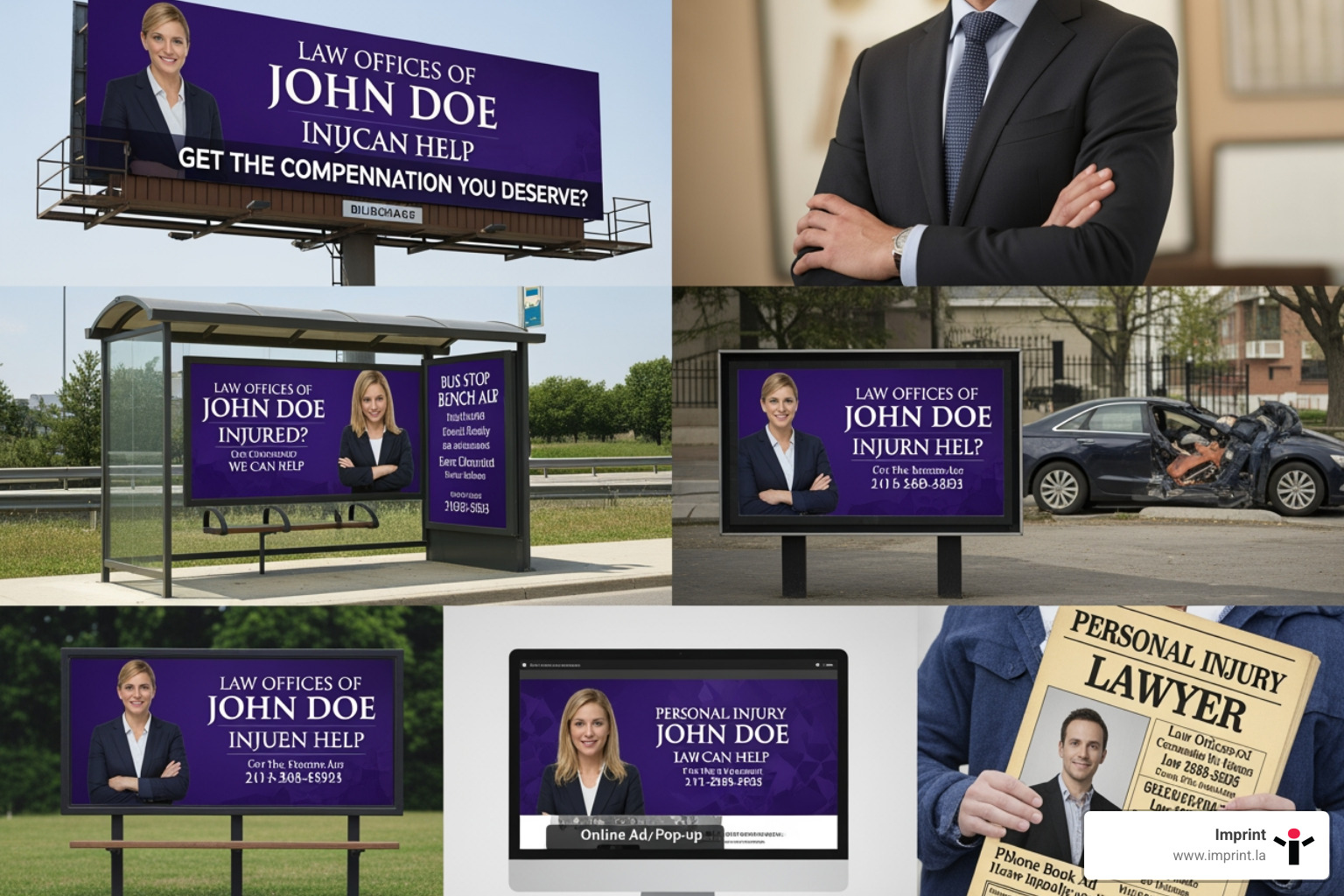
Personal injury lawyer ads have become one of the most dominant forces in American advertising — and for good reason.
Here's a quick snapshot of where things stand:
| What | The Numbers |
|---|---|
| Total legal ad spend in 2024 | $2.5 billion across 26.9 million ads |
| TV legal ad spend (through Nov. 2024) | $1.2 billion |
| Pennsylvania alone (2023) | $84 million, 780,000 messages |
| Billboard spend increase since 2019 | Up 62% |
| Trial lawyer digital spend (2023) | $40 million |
Drive down any major highway and the scale becomes visceral. On Interstate 95 in Philadelphia, one reporter counted 30 personal injury lawyer billboards heading south — and 33 heading north. That's not a coincidence. It's a calculated, multi-million-dollar marketing arms race.
For any law firm — or any service business watching this industry — the real question isn't why these firms advertise so aggressively. It's what actually works, what it costs, and how to do it without burning your budget.
This guide breaks down the strategies, the economics, and the compliance rules behind legal advertising so you can build a smarter, more efficient acquisition system.
I'm Brent Burghdorf, founder of Imprint and a performance marketing specialist who has built scalable lead acquisition systems across high-ticket service industries — including the kind of competitive paid media environments where personal injury lawyer ads set the benchmark for aggressive, high-volume marketing. If you want to understand how to compete at this level without wasting spend, you're in the right place.
The Evolution and Impact of Personal Injury Lawyer Ads
The landscape of personal injury lawyer ads didn't explode overnight. It is the result of decades of legal battles and a fundamental shift in how the American public views the justice system. For much of the 20th century, if you were a lawyer and you took out an ad, you weren't just seen as "tacky"—you were likely breaking the law.
Today, that taboo has vanished, replaced by a $2.5 billion industry. But to win in this space, we have to understand how we got here and the massive economic ripples these ads create.
Historical Legal Milestones
For nearly 70 years, the legal profession operated under a strict "no-advertising" policy. In 1908, the American Bar Association (ABA) implemented a ban on lawyer advertising, believing that commercializing the law would diminish the integrity of the profession and erode public trust. Lawyers were expected to gain clients through reputation and word-of-mouth, not billboards.
Everything changed in the "disco era." In the landmark 1977 case Bates v. State Bar of Arizona, the U.S. Supreme Court ruled that lawyer advertising is a constitutionally protected form of commercial speech under the First Amendment. The court argued that restricting ads actually disadvantaged the public by making it harder for people to find affordable legal services.
Once the U.S. Supreme Court overturned it, the floodgates opened. Early pioneers like Rand Spear and Jim Adler began testing the waters with Yellow Pages ads and eventually television. Over time, these efforts evolved from simple information sharing to the high-octane, cinematic productions we see today.
Economic Consequences of Aggressive Advertising
The sheer volume of personal injury lawyer ads has fundamentally altered the legal economy. In 2024 alone, law-service providers spent over US $2.5 billion on roughly 26.9 million ads across the United States. This includes TV, radio, print, and digital media.
This massive spend isn't just about capturing existing cases; it's about expanding the market. Ads educate people on their rights, sometimes identifying claims they didn't even know they had. However, this has led to several significant trends:
- Rise in Lawsuit Filings: A recent study by the RAND Corporation found that between 2012 and 2019, the number of cases filed in 19 states grew by nearly 10% as legal advertising increased.
- Nuclear Verdicts: We are seeing a surge in "nuclear verdicts"—jury awards of $10 million or more. For example, in Philadelphia—a city known for being a plaintiff-friendly venue—in 2024 it registered 12 nuclear verdicts, up from 10 the year prior.
- Venue Shifts: After a 2022 ruling loosened venue rules in Pennsylvania, medical malpractice cases up 46 percent in Philadelphia from 2019 to 2024.
- Insurance Costs: Groups like the Pennsylvania Coalition for Civil Justice Reform argue that these aggressive ads drive up the cost of living for everyone, as higher jury awards eventually lead to increased insurance premiums.
High-Impact Strategies for Legal Marketing
In a market as saturated as Los Angeles or Beverly Hills, simply having an ad isn't enough. You need a strategy that cuts through the noise. At Imprint, we focus on Data-Driven Google Ads because while a billboard builds a brand, a search ad captures a person the moment they are looking for help.
Crafting Memorable Personal Injury Lawyer Ads
The most successful personal injury lawyer ads rely on three pillars: storytelling, emotional appeal, and credibility. When someone is injured, they are often at their most vulnerable. They aren't looking for a "lawyer"; they are looking for a champion.
- Storytelling: Effective ads often feature a narrative of a "regular person" facing off against a giant corporation. Morgan & Morgan’s "Everywhere for Everyone" is a classic example, focusing on the firm's dedication to the people rather than the powerful.
- Celebrity Spokespeople: Many firms use a paid spokesperson in ads to build instant trust. Whether it’s William Shatner or Danny Trejo, celebrity presence can make a firm feel larger-than-life and more reliable to a broad audience.
- Catchy Branding: Slogans like "The Texas Hammer" or "One Call, That's All" stick in the consumer's mind. When an accident happens, the brain reaches for the most accessible memory, and a catchy jingle often wins.
Balancing Traditional Media and Digital Growth
While TV and billboards are still "king" for reach, digital marketing is where the actual ROI is measured and optimized. We’ve found that a blended approach is often the most effective for firms in competitive hubs like Santa Monica.
- The Billboard "Surveillance" Effect: Modern billboards are more high-tech than they look. When you drive past a digital billboard, it picks up the device ID on your phone. This allows firms to retarget you with digital ads on social media later that day.
- Direct Response TV: Daytime TV remains a powerhouse for personal injury. Why? Because people who have been injured are often at home or in a hospital bed during the day, making them a captive audience for direct-response ads.
- Social Media Algorithms: Platforms like TikTok and Instagram allow for "fast-cut" content that humanizes the firm. Sharing raw, authentic stories—like a founder's personal journey—can build a deeper connection than a polished TV spot. Check out our Client Stories PPC Category to see how these multi-channel strategies drive real numbers.
| Ad Channel | Reach | Cost | Tracking Capability |
|---|---|---|---|
| TV | Very High | High | Low/Medium |
| Billboards | High | Medium | Medium (via Device ID) |
| Digital (PPC/Meta) | Targeted | Variable | Very High |
Navigating Compliance and Lead Management
Generating a lead is only half the battle. In personal injury lawyer ads, if your intake process is broken or your ads aren't compliant, you're either wasting money or risking your license.
Ethics in Personal Injury Lawyer Ads
Every state has its own specific rules, but most are based on The American Bar Association (ABA) Model Rules of Professional Conduct. The core requirement is that ads must be truthful and not misleading.
- Truthfulness: You cannot guarantee results. Many states require disclaimers stating that "past results do not guarantee future outcomes."
- Referral Models: Some of the most aggressive advertisers aren't actually trial lawyers; they are "marketing firms" that generate leads and refer them to other firms for a fee. While legal in many jurisdictions, these advertisements meet state bar standards only if they are transparent about the referral process.
- Litigation Finance: Increasingly, mass tort ads are bankrolled by hedge funds and litigation-finance firms. This allows for massive ad buys that traditional small firms could never afford on their own.
Managing Leads for Maximum ROI
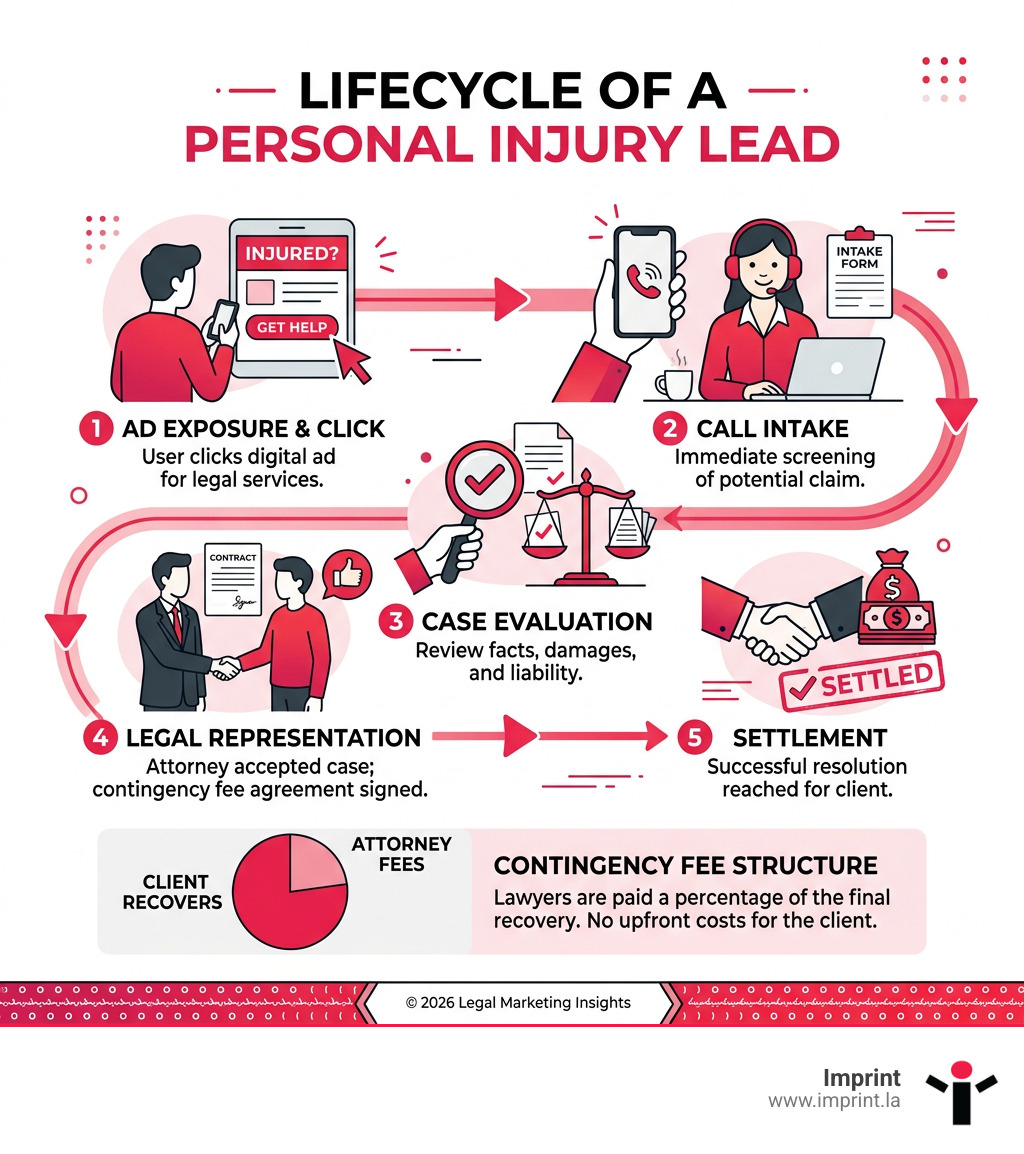
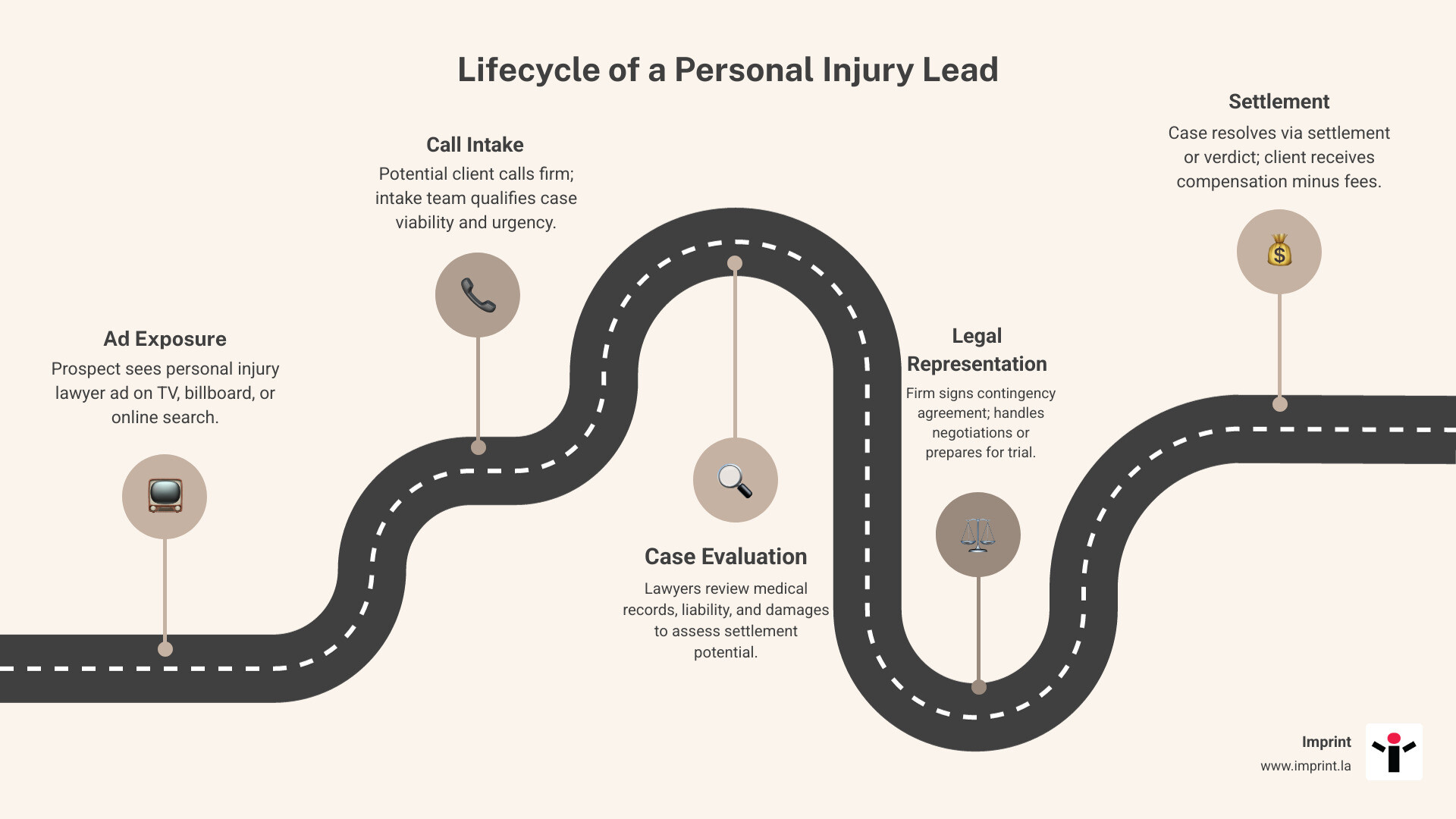
If you’re running a PPC/SEM Agency 1 campaign, you need to be ready for the "speed to lead." In personal injury, a lead that isn't called back within five minutes is often a lost case.
- CRM Integration: A robust CRM is essential for tracking where every dollar goes. It helps you distinguish between a "cheap" lead and a "quality" case.
- Optimized Landing Pages: Don't send high-intent traffic to your homepage. Use Meta Ads Landing Pages that are specifically designed to convert injured victims quickly.
- Automated Nurturing: Not every lead is ready to sign immediately. Automated email and SMS sequences keep your firm top-of-mind while the victim is deciding their next steps.
- Contingency Fee Clarity: Most ads emphasize "No fee unless we win." This is the standard 33% to 40% contingency model, which lowers the barrier to entry for clients but requires the firm to be highly selective about which cases they actually take to trial (currently less than 1%).
As a leading PPC/SEM Agency, we ensure that every click is tracked from the first impression to the final settlement, providing the transparency firms need to scale.
Frequently Asked Questions about Legal Advertising
Why are personal injury lawyer ads so ubiquitous in major cities?
In cities like Los Angeles, the high density of traffic and industry leads to a high volume of accidents. Because personal injury is a contingency-fee business, firms can afford to spend heavily on ads if they believe a single "big" case will cover the cost of the entire campaign. It’s a high-stakes volume game where brand awareness is the ultimate currency.
How much does it cost to produce a professional lawyer commercial?
Production costs vary wildly. A simple, 30-second spot can be produced for as low as $10,000 using local talent. However, high-end cinematic ads—the kind that win Super Bowl slots—can cost hundreds of thousands of dollars in production alone. On top of that, the average airtime for a 30-second national TV spot is approximately $115,000.
What are the most common rules for lawyer ad compliance?
The most common rules include:
- No false or misleading claims about results.
- Clear disclaimers regarding "no fee" promises.
- Prohibitions on direct "ambulance chasing" (soliciting someone in person immediately after an accident).
- Ensuring all testimonials are from real clients (or clearly labeled as dramatizations).
Conclusion
The world of personal injury lawyer ads is moving faster than ever. We are entering an era of massive market consolidation, where AI-driven ad targeting and non-lawyer ownership of firms are becoming real possibilities. To stay ahead, firms must move beyond "just" billboards and embrace a data-backed, multi-channel approach.
At Imprint, we specialize in helping high-growth firms navigate this complexity. Whether it’s through PPC/SEM Agency services or high-converting creative, our goal is to help you win the legal ad game without breaking the bank. By combining the emotional power of traditional storytelling with the surgical precision of modern digital marketing, you can build a practice that doesn't just "advertise"—it dominates.
