
Winning Big with Data Driven Lead Strategies
Why Data Driven Lead Strategies Decide Who Wins (and Who Wastes Budget)
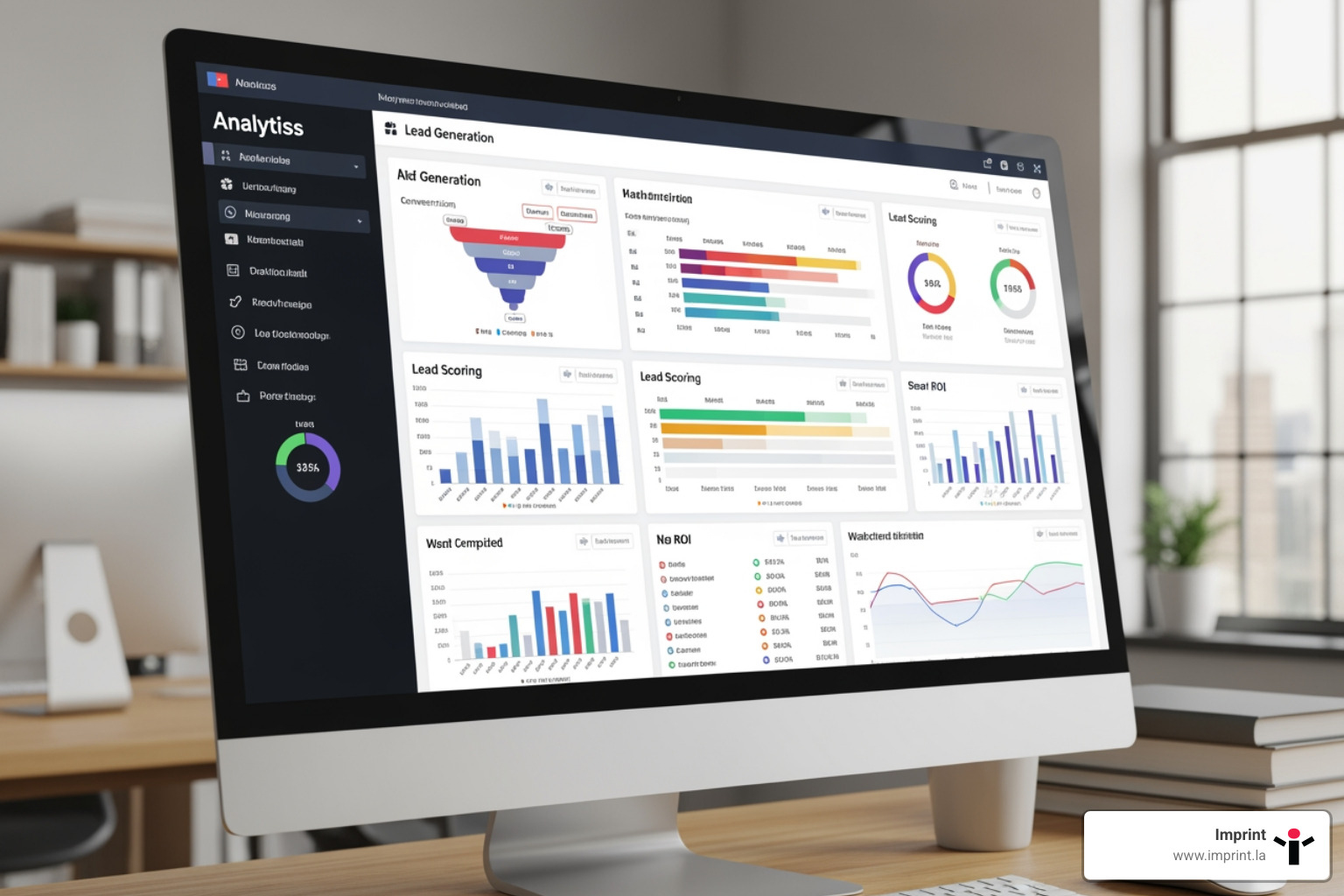
Data driven lead strategies are the difference between scaling ad spend confidently and burning budget on leads that never convert.
Here's a quick breakdown of what they involve:
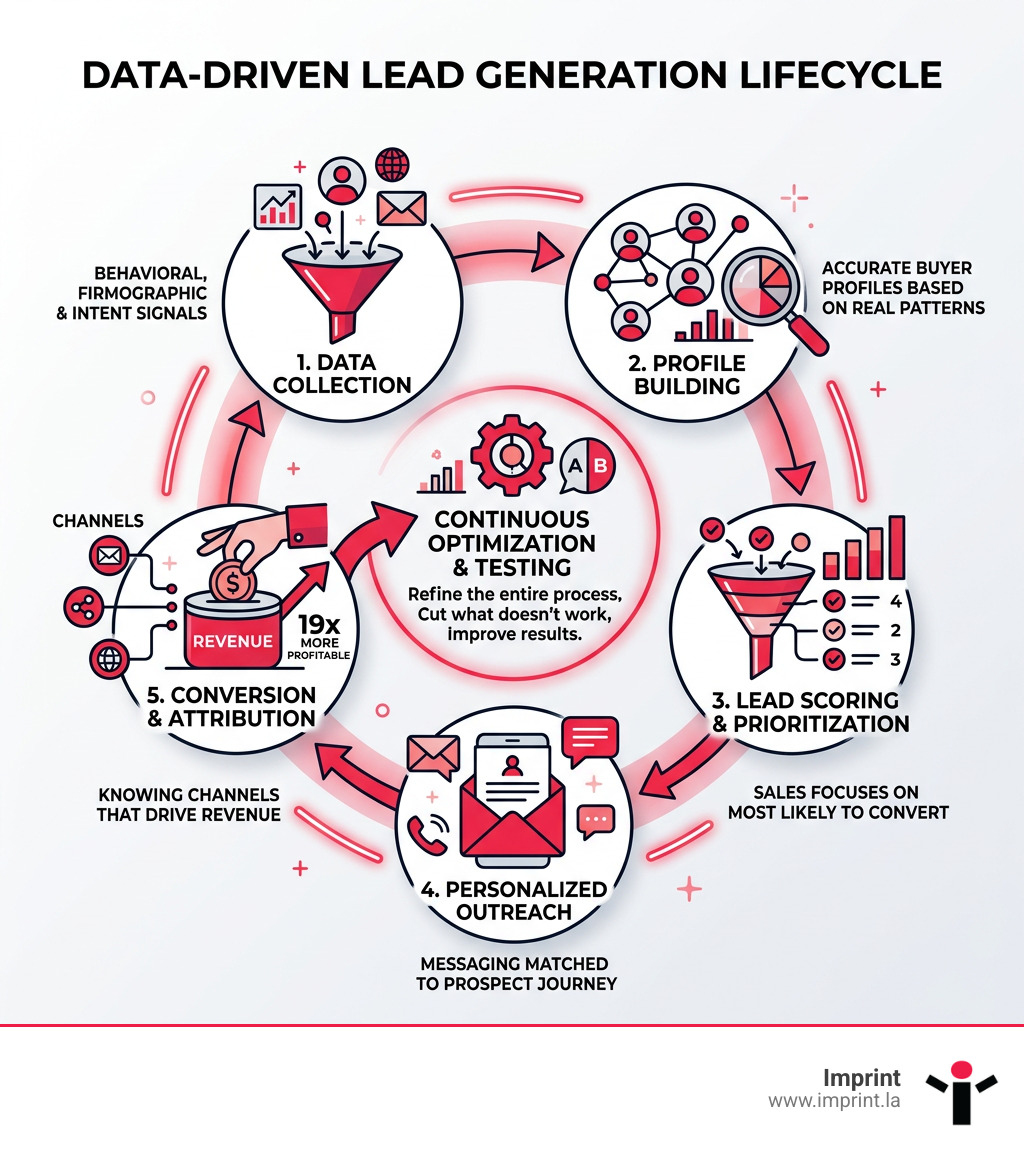
- Collect the right data - behavioral, firmographic, and intent signals
- Build accurate buyer profiles - based on real customer patterns, not guesswork
- Score and prioritize leads - so sales focuses on prospects most likely to convert
- Personalize outreach - with messaging matched to where each prospect is in their journey
- Measure and attribute results - so you know exactly which channels and touchpoints drive revenue
- Test and optimize continuously - refine what works, cut what doesn't
The payoff is real. Data-driven organizations are 23 times more likely to acquire customers and 19 times more likely to be profitable than those flying blind (McKinsey Global Institute). Yet 79% of marketing leads never convert - largely because most teams lack the systems to act on the right signals at the right time.
If your Meta or Google Ads spend keeps growing but lead quality stays inconsistent, a fragmented or intuition-led approach is likely the culprit.
I'm Brent Burghdorf, founder of Imprint and a performance marketing specialist who has built data driven lead strategies for brands across e-commerce, real estate, healthcare, and high-ticket services. In this guide, I'll walk you through the exact frameworks and tactics we use to turn raw data into predictable, scalable revenue.
The Core Pillars of Data Driven Lead Strategies
When we talk about data driven lead strategies, we aren't just talking about having a spreadsheet full of emails. We’re talking about a fundamental shift in how your business identifies, engages, and converts prospects. Think of it as the difference between fishing with a massive, leaky net in the middle of the ocean versus using high-tech sonar to find exactly where the prize-winning marlin are swimming.
To win in competitive markets like Los Angeles or Santa Monica, your strategy must be built on a foundation of verifiable truth. This starts with data lineage—understanding exactly where your data comes from and how it flows through your systems. According to Scientific research on data lineage benefits, organizations that maintain clear records of their data flow streamline discovery and ensure that the insights guiding their sales team are actually accurate.

The core pillars of this approach include:
- Intent Data: Identifying who is actively looking for a solution right now.
- Behavioral Insights: Tracking how users interact with your digital assets.
- Lead Quality: Prioritizing high-value prospects over raw volume.
By focusing on these pillars, we move away from "spray and pray" tactics. As we discuss in our guide on The Importance of Digital Marketing, the modern landscape moves too fast for intuition alone. You need a framework that evolves as your customers do.
Leveraging Intent Data for High-Quality Prospects
Intent data is the "secret sauce" of modern B2B and high-ticket B2C sales. It allows us to see beyond basic demographics and look at actual "in-market" signals. Are they searching for "best CRM for small teams" or "how to scale Meta Ads"? These search patterns, combined with on-site behavior like time spent on pricing pages or downloading technical whitepapers, tell us exactly where they are in the buyer journey.
Research suggests that businesses using intent data can drive nearly double the leads compared to traditional methods. However, the most effective approach starts not with the data itself, but with identifying a business opportunity. As noted in Making advanced analytics work for you, you should always ask: "What’s the least complex model that would improve our performance?" Don't overcomplicate it; start by identifying the 20% of behaviors that lead to 80% of your conversions.
Building Robust Buyer Personas with Real-World Data
Most companies build buyer personas based on what they think their customers look like. We prefer to build them based on who is actually buying. This involves analyzing:
- Firmographics: Company size, industry, and tech stack.
- Psychographics: Pain points, professional goals, and motivations.
- Customer Profiling: Looking at the characteristics of your most profitable existing clients to find more people just like them.
When you use real-world data to build these profiles, your conversion rates can jump by as much as 73%. This level of detail also fuels your SEO efforts. By understanding the specific language and challenges of your persona, you can execute The Art of Keyword Research in 2019: Everything You Need to Know with surgical precision, targeting the exact terms your ideal leads use when they are ready to solve a problem.
Essential Tools and Technologies for Implementation
You can't run a world-class lead operation on sticky notes. To implement data driven lead strategies, you need a "MarTech" stack that talks to itself. In our experience as a Digital Marketing Agency in Los Angeles, the most successful companies centralize their data.
Your stack should include:
- CRM Platforms: Tools like HubSpot or Salesforce to act as your "single source of truth."
- Marketing Automation: To trigger emails or ads based on specific user actions.
- Heatmaps and Session Recordings: Tools that show you exactly where people are getting stuck on your landing pages.
If you see a heatmap showing that no one is scrolling past the second paragraph of your lead magnet, you don't need a "better" product—you need better content.
Optimizing Conversion with AI and Predictive Modeling in Data Driven Lead Strategies
Artificial Intelligence has moved from a buzzword to a mandatory tool for lead optimization. Predictive lead scoring uses machine learning to analyze thousands of past leads and identify the patterns that lead to a closed deal. While a human might think a "CEO" is always a better lead, the data might show that "Directors of Operations" at mid-sized firms actually convert 3x faster.
By using these models, companies have seen lead response times double and conversion rates climb by up to 50%. This technology helps you filter out the noise so your sales team only talks to "Sales-Qualified Leads" (SQLs). To find the right data points to feed these models, you can use an SEO Keyword Planner to see what high-intent queries are currently trending in your industry. For more on this, check out How predictive lead scoring can help your business.
Using A/B Testing to Refine Outreach
A/B testing is the "humility check" of marketing. It’s the process of admitting we don't know everything and letting the audience tell us what they want. Whether it's testing two different headlines on a landing page or two different subject lines in a cold email, small changes lead to massive gains.
For example, simply changing a button from "Order Information" to "Get Information" has been shown to boost conversions by 21% for some brands. In the B2B world, A/B testing relevance in B2B remains high because it allows you to optimize the user experience (UX) for complex decision-makers who have very little time to waste.
Advanced Tactics for Personalization and Nurturing
Once you have the data, you have to use it to make the prospect feel like you’re talking only to them. This is "hyper-personalization." Instead of a generic "Dear Customer" email, you’re sending "Hey [Name], I saw you were looking at our guide on [Topic]—here is a case study on how we helped a company in [Industry] solve that exact problem."
| Feature | Traditional Lead Gen | Data-Driven Lead Gen |
|---|---|---|
| Targeting | Broad / Demographic | Intent-based / Segmented |
| Messaging | Generic / Product-focused | Personalized / Solution-focused |
| Follow-up | Manual / Inconsistent | Automated / Trigger-based |
| Lead Quality | Unpredictable | Scored and Measured |
Triggered emails—those sent automatically when a user takes a specific action—have open rates up to 60% higher than standard blasts. If you’re just starting out, our guide on What is Email Marketing: A Guide to Getting it Right covers the basics of setting up these high-performing sequences.
Segmenting Prospects for Targeted Communication
Segmentation is the art of dividing your giant list into smaller, more manageable groups based on shared traits. We typically segment by:
- Demographics: Age, location (like focusing on Beverly Hills vs. Santa Monica), and job title.
- Engagement Levels: How often do they open your emails or visit your site?
- Pain Points: What specific problem are they trying to solve?
According to 78% improvement in client acquisition, businesses that use data-driven marketing see massive improvements in both acquisition and conversion. When your message matches the prospect's specific reality, they are much more likely to trust you.
Aligning Sales and Marketing Through Shared Data Driven Lead Strategies
One of the biggest "leaks" in any funnel is the gap between marketing (who generates the leads) and sales (who closes them). Data driven lead strategies bridge this gap by creating a shared language. When both teams agree on what a "Qualified Lead" looks like based on data, the finger-pointing stops.
This requires a continuous feedback loop. Sales needs to tell marketing: "The leads from LinkedIn are great, but the ones from Facebook aren't ready to buy yet." Marketing then adjusts the targeting. This alignment can lead to a 15% increase in revenue growth. It’s similar to how How and Why Referral Marketing Works—success comes from building a system where every part of the business supports the other.
Measuring Success and Attribution Models
If you can’t measure it, you can’t improve it. In performance marketing, we live and die by the data. But measuring success isn't just about looking at your total number of leads; it’s about understanding the value of those leads and where they came from.
Before you can accurately measure ROI, your "house" needs to be in order. We recommend starting with a 7 Step Guide to a Comprehensive Technical SEO Audit to ensure your tracking pixels and analytics are firing correctly. If your data is messy, your conclusions will be too.
Understanding Position-Based Attribution
Most marketers use "last-touch" attribution, giving all the credit to the very last click before a purchase. But that’s like giving the kicker 100% of the credit for a football win while ignoring the quarterback who drove the team 90 yards down the field.
We prefer Position-Based Attribution (also known as U-Shaped attribution). This model gives:
- 40% credit to the first touchpoint (the "introduction").
- 40% credit to the last touchpoint (the "closer").
- 20% credit distributed among the middle touchpoints (the "nurturers").
This gives you a much clearer picture of your marketing effectiveness. You might find that your blog posts aren't "closing" many deals, but they are the #1 way people discover your brand. For a deeper dive, see how 40% credit distribution to key touchpoints changes your perspective on budget allocation.
Key Performance Indicators for Lead Optimization
To keep your strategy on track, you need to monitor the right KPIs. At Imprint, we focus on:
- Cost Per Lead (CPL): How much are we paying for an email address?
- Sales-Qualified Leads (SQLs): How many of those leads are actually worth a salesperson's time?
- Customer Lifetime Value (CLV): How much is a customer worth over the next 3 years?
Data-driven companies beating revenue goals are 58% more likely to exceed their targets because they use these metrics to make proactive adjustments rather than reactive guesses.
Frequently Asked Questions about Data-Driven Leads
What is the difference between traditional and data-driven lead generation?
Traditional lead generation often relies on broad messaging, manual follow-ups, and gut feelings. It’s "fishing with a net." Data driven lead strategies use specific signals—like what a user searched for or which pages they visited—to deliver personalized messages at the exact right time. It’s "fishing with sonar and a spear."
How does intent data improve B2B sales conversion rates?
Intent data allows you to identify companies that are already researching a solution. Instead of calling a prospect who has never heard of you, you’re reaching out to someone who spent twenty minutes on your "competitor comparison" page yesterday. This relevance can double your lead volume and significantly shorten the sales cycle.
What are the most common challenges in implementing a data-driven strategy?
The biggest hurdles are usually "dirty data" (duplicates and outdated info), a lack of integration between tools (the CRM doesn't talk to the Ad account), and a culture that is resistant to change. Overcoming this requires a commitment to clean data hygiene and a "test and learn" mindset.
Conclusion
Winning with data driven lead strategies isn't about having the most data; it's about having the most insight and the courage to act on it. When 63% of marketers struggle with lead generation, those who embrace a performance-driven, data-backed approach are the ones who will dominate their niche.
At Imprint, we don't just "run ads." We build comprehensive lead engines for businesses in Los Angeles, Santa Monica, and beyond. Our specialization in Meta and Google Ads, combined with a deep focus on UX/UI and data analytics, allows us to deliver an average 3.8x ROAS for our clients. We take the guesswork out of growth.
Ready to stop guessing and start winning? Start Winning with a Top PPC/SEM Agency and let's build a strategy that actually scales.
