
How a Mobile UX Design Agency Can Save Your Retention Rates
Introduction

Finding the right mobile ux design agency is crucial for success in today's mobile-first world. In an era where the average person spends over four hours a day on their mobile device, the stakes for digital products have never been higher. Businesses often seek partners who can deliver intuitive, high-performing mobile experiences that don't just look good but function flawlessly under pressure. To choose the best agency, look for these key qualities:
- Experience: A strong track record in mobile app design for various operating systems (iOS, Android, hybrid).
- User-Centric Process: Agencies that prioritize in-depth user research, wireframing, prototyping, and usability testing.
- Innovation: Competence in emerging trends like AI-enhanced design, voice/gesture interfaces, and Web3 apps.
- Results-Driven: A focus on measurable outcomes like conversion rates, user retention, and client satisfaction.
- Comprehensive Services: Offerings including UI/UX design, visual design, responsive design, and post-launch optimization.
- Communication: Clear and efficient collaboration throughout the project lifecycle.
When there are more mobile phones than people, competition for user attention is intense. A seamless and engaging mobile experience is no longer just a nice-to-have; it's essential for keeping users engaged and ensuring your digital products stand out in a saturated marketplace. Crafting a truly user-friendly mobile interface is a complex challenge, requiring specialized expertise that balances technical constraints with human psychology.
Brent Burghdorf, founder of Imprint, brings deep expertise in building scalable acquisition systems that drive measurable revenue growth, a critical aspect that complements the work of a top mobile ux design agency. His data-driven approach focuses on performance accountability, ensuring marketing efforts align with user-centric product experiences to maximize every dollar spent on acquisition.
Why Your Business Needs a Specialized Mobile UX Design Agency
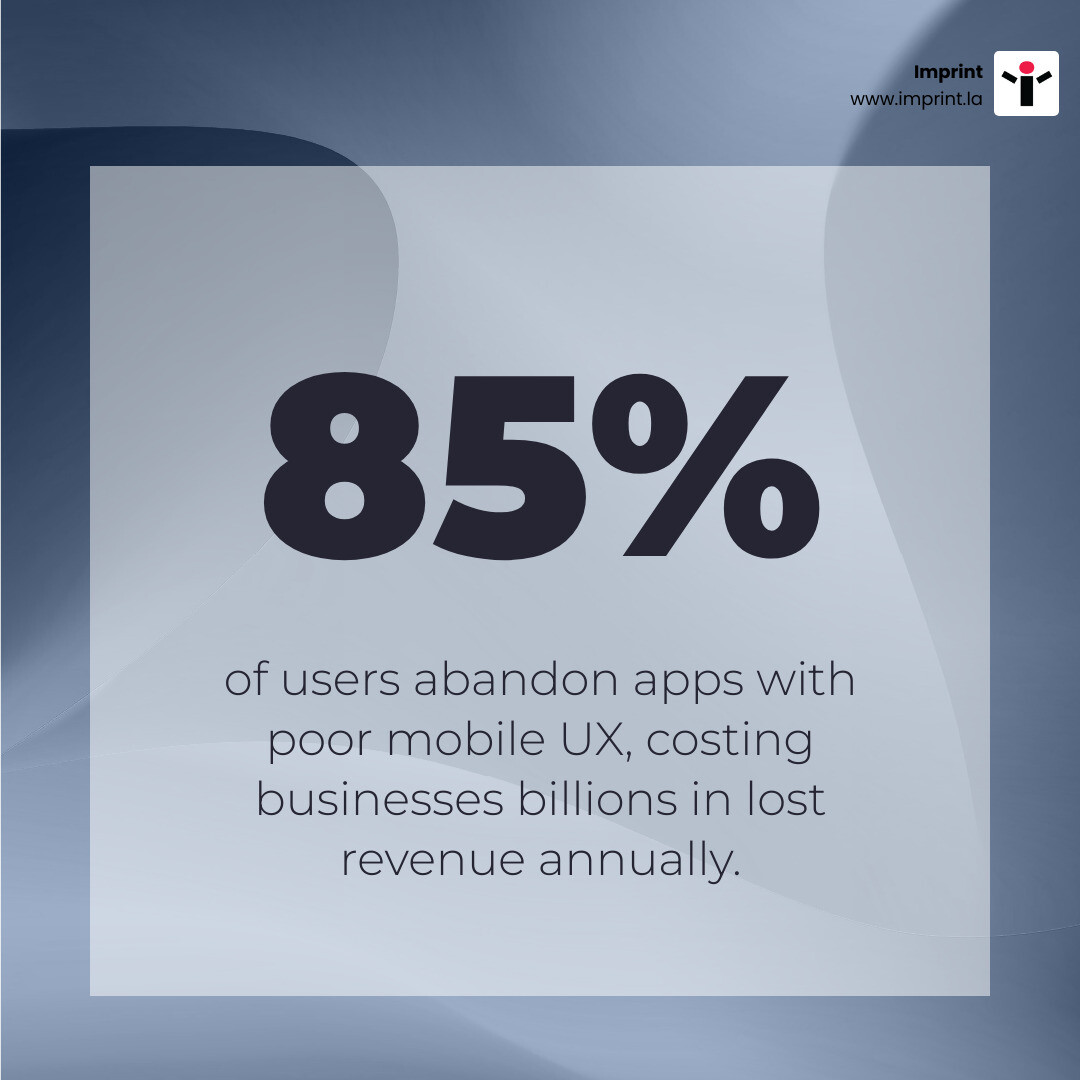
In the hyper-competitive markets of Los Angeles, Santa Monica, and Beverly Hills, the "mobile-first" mantra is no longer a suggestion—it is a survival requirement. With mobile phone penetration now exceeding the global population, your customers are interacting with your brand primarily through a five-inch screen. If that interaction is clunky, slow, or confusing, they won't just complain; they’ll hit "uninstall" and move to a competitor within seconds.
A specialized mobile ux design agency does more than just make things look "pretty." They focus on conversion optimization by removing user friction at every possible touchpoint. Research from Forrester indicates that a well-designed user interface can raise conversion rates by up to 200%, while a truly great user experience can yield a staggering 400% lift. This isn't just about aesthetics; it’s about the deep psychology of how people move through a digital space and the micro-decisions they make during a session.
When we talk about user experience design, we are looking at the ROI of every tap, swipe, and scroll. Specialized agencies understand the nuances of Material Design, Google’s open-source design system, which provides a scientific framework for building beautiful, usable products. By adhering to these standards, an agency ensures that your app feels familiar and intuitive to the billions of Android users worldwide, reducing the learning curve for new customers.
Furthermore, specialized partners help you avoid the "leaky bucket" syndrome. You can spend thousands on Meta and Google ads, but if your mobile UX is poor, your retention rates will plummet, wasting your marketing budget. A dedicated agency uses data-backed insights to ensure that once a user is in your ecosystem, they stay there, building long-term brand loyalty and increasing the lifetime value of each customer.
Core Services and Processes of Elite Design Partners
The best agencies offer a comprehensive suite of services tailored to the specific needs of modern platforms. Whether you are building native iOS solutions, Android apps, or exploring hybrid technology like React Native and Flutter, the goal remains the same: seamless functionality across all devices. Consistency is key; a user should feel the same brand presence whether they are on an iPhone 15 or an older Android tablet.
Elite partners also specialize in:
- Progressive Web Apps (PWAs): Delivering app-like experiences through a mobile browser, perfect for reaching users without requiring a download.
- Enterprise Solutions: Simplifying complex internal workflows for large-scale organizations to improve employee productivity.
- E-commerce Optimization: Reducing cart abandonment through streamlined checkout flows and one-tap payment integrations.
To truly succeed, you must understand how to optimize for a mobile audience. This involves more than just shrinking a desktop site; it requires a complete rethink of content hierarchy, thumb-zone navigation, and responsive layouts that adapt to various screen aspect ratios.

Proven Methodologies of a Mobile UX Design Agency
A top-tier mobile ux design agency doesn't guess; they follow a rigorous, iterative process. One of the most respected frameworks is the "Double Diamond" methodology, which involves four distinct phases: Discover, Define, Design, and Deliver. This framework ensures that the team explores the problem space thoroughly before committing to a specific solution.
- Discover & Research: This is the foundation. We dive deep into user personas, stakeholder interviews, and competitive analysis to ensure we aren't "designing the wrong product beautifully." We look for pain points in existing solutions to find opportunities for innovation.
- User Journey Mapping: We plot every potential path a user might take, identifying "happy paths" and accounting for error states. This helps in visualizing the entire ecosystem of the app.
- Prototyping & Wireframing: Before a single line of code is written, we create interactive prototypes. This allows for rapid testing and feedback, saving months of development rework and thousands of dollars in engineering costs later.
- Usability Testing: We put the design in front of real users. By observing where they struggle or hesitate, we can refine the visual hierarchy and interaction patterns to ensure the final product is as frictionless as possible.
Following Apple’s Human Interface Guidelines is non-negotiable for iOS apps. These guidelines ensure that your app feels like a natural part of the Apple ecosystem, utilizing familiar gestures, haptic feedback, and system-wide behaviors that users have come to expect and trust.
Emerging Trends Shaping Mobile UX in 2026
As we look toward 2026, the landscape of mobile design is shifting rapidly. We are moving beyond static screens into a world of dynamic, AI-enhanced experiences that anticipate user needs before they even express them.
- AI-Enhanced Design: AI is being used to create "smart onboarding" and predictive suggestions. Imagine an app that reorganizes its interface based on your most frequent actions, making the experience feel truly personalized to each individual user.
- Voice and Gesture Interfaces: With the rise of wearables and hands-free tech, voice-initiated interfaces and complex gesture navigation are becoming standard. This reduces the reliance on traditional buttons and allows for more immersive experiences.
- Web3 and Blockchain: As decentralized apps (dApps) become more mainstream, agencies are designing interfaces that make complex Web3 concepts—like wallet management and smart contracts—accessible and safe for the average user.
- Inclusive Design & Accessibility: Adhering to WCAG standards is no longer optional. This includes larger touch targets, high-contrast modes, and screen-reader compatibility. Designing for accessibility ensures that everyone, regardless of their physical abilities, can use your product effectively, which also happens to improve the experience for all users.
- Haptic Feedback and Micro-interactions: Subtle vibrations and animations provide tactile confirmation of actions, making the digital experience feel more physical and grounded.
Frequently Asked Questions about Mobile UX Design
How much do mobile UX design services typically cost?
Pricing for mobile UX design varies significantly based on the scope, complexity, and the specific goals of the project. For smaller, focused projects—such as a 10-screen app redesign or a specific feature update—costs typically range from $1,850 to $5,000.
However, for comprehensive enterprise-level projects that involve deep user research, custom design systems, and extensive prototyping for multiple platforms, budgets can range from $10,000 to $35,000 or more. Most agencies also offer hourly rates for ongoing optimization, which generally fall between $25 and $199 per hour depending on the agency's location, reputation, and expertise level. Investing in quality design upfront often saves significant costs in future development and customer support.
What is the typical timeline for a mobile app design project?
A standard mobile app design project usually takes between 10 to 20 weeks. This timeline is carefully structured to allow for iterative testing and refinement:
- Discovery (2-4 weeks): Research, strategy, and defining the project roadmap.
- Wireframing & Prototyping (4-8 weeks): Iterative design cycles and user testing to validate concepts.
- High-Fidelity UI Design (4-6 weeks): Finalizing visuals, typography, and brand assets.
- Handoff (1-2 weeks): Preparing detailed documentation and assets for the development team to ensure a smooth build.
How do I choose the right agency for my specific industry?
Selecting a partner is about more than just a portfolio review; it's about finding a strategic ally. Look for:
- Technical Expertise: Do they understand the specific constraints and opportunities of your platform (iOS vs. Android)?
- Industry Relevance: Have they worked in your sector (Fintech, Healthcare, SaaS, E-commerce)? Industry-specific knowledge can help avoid common pitfalls.
- Communication Style: Do they offer a collaborative process with regular feedback loops and transparent project management?
- Proven Results: Ask for case studies that show measurable impact, such as a reduction in bounce rates, an increase in user session length, or a direct boost in conversion metrics.
Conclusion
In the competitive digital hubs of Los Angeles and Santa Monica, your mobile app is often your most important brand touchpoint. It is the digital storefront that never closes. Partnering with a specialized mobile ux design agency ensures that your product isn't just functional, but delightful, encouraging users to return time and time again.
At Imprint, we understand that great design must be paired with great performance. As a performance-driven agency, we combine our data-backed strategies—delivering a 3.8x average ROAS—with top-tier creative services to help you build, launch, and scale digital products that actually convert. We don't just design for the screen; we design for the bottom line.
Ready to transform your mobile experience and stop the churn? Contact our creative team today to see how we can help you save your retention rates and grow your revenue through world-class design and performance marketing.
