
Lead Generation Funnel Design: The Secret to Performance Marketing in LA
Why Most Ad Spend Fails Without a Lead Generation Funnel Design
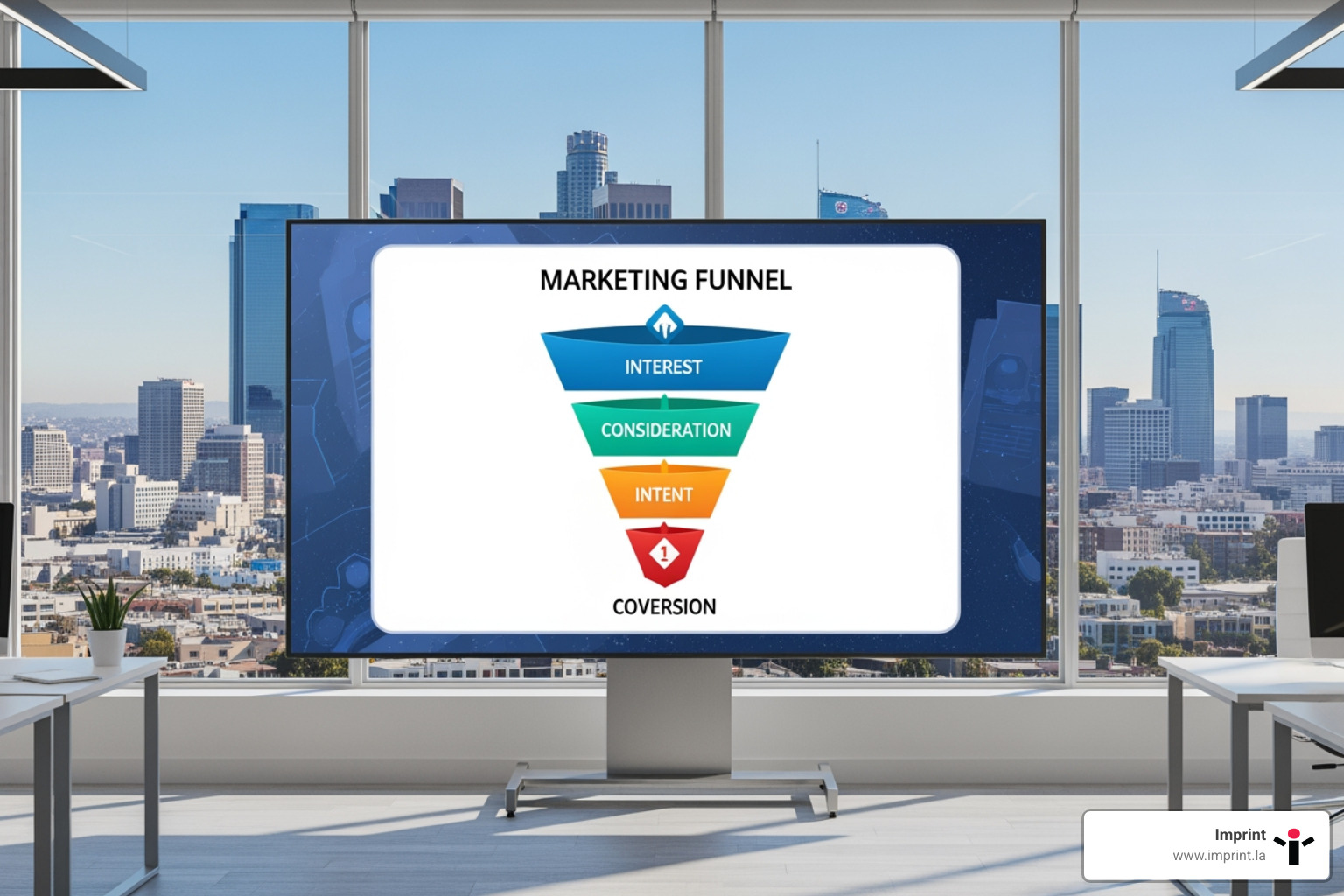
Lead generation funnel design is the structured process of building a system that moves strangers into qualified prospects — and eventually paying customers — through deliberate stages, content, and automation.
If you're running Meta or Google Ads and getting traffic but not predictable revenue, the funnel is almost always the problem.
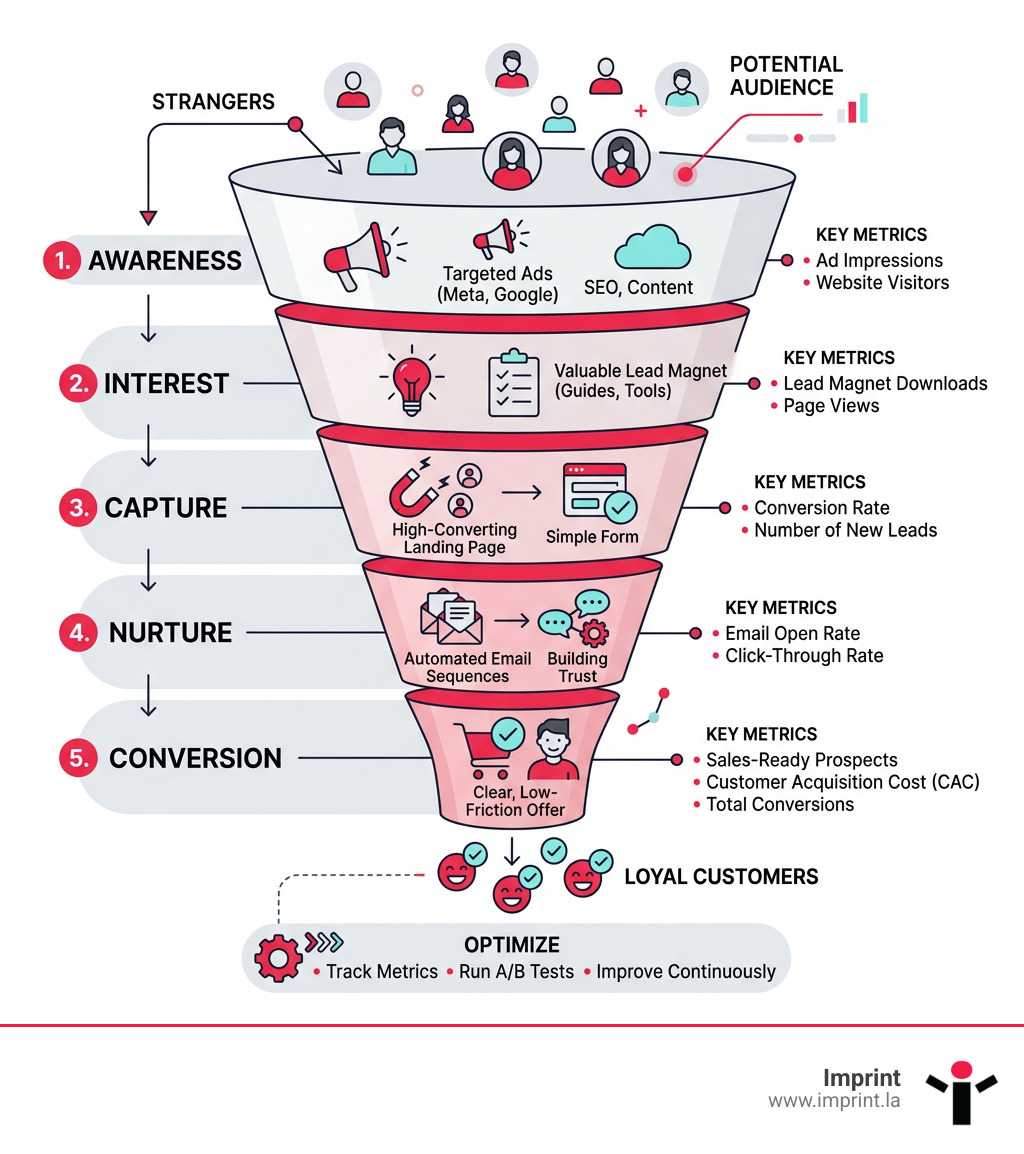
Here's what a high-performing lead generation funnel design includes:
- Awareness — Attract the right audience with targeted ads, SEO, or content
- Interest — Engage them with a valuable lead magnet (checklist, guide, free tool)
- Capture — Convert visitors with a high-converting landing page and simple form
- Nurture — Follow up with automated email sequences that build trust
- Conversion — Turn warm leads into buyers with a clear, low-friction offer
- Optimize — Track metrics, run A/B tests, and improve each stage continuously
A well-designed funnel doesn't just generate more leads — it generates better ones. Companies that nurture leads through a structured funnel generate 50% more sales-ready prospects while reducing acquisition costs by 33%.
Most scaling problems aren't ad budget problems. They're funnel problems.
I'm Brent Burghdorf, founder of Imprint and a performance marketing specialist who has spent years building lead generation funnel designs for brands across e-commerce, healthcare, real estate, and high-ticket services. My work focuses on building acquisition systems that compound over time — not just traffic spikes that fade.
The sections below break down exactly how to build, optimize, and scale a funnel that turns ad spend into predictable revenue.
Defining Lead Generation Funnel Design vs. Sales Pipelines
In our experience working with Los Angeles businesses, we often see "funnel" and "pipeline" used interchangeably. However, to achieve a high ROI, you must understand the distinction. A lead generation funnel design is the strategic architecture that attracts and filters potential customers. It is the "front door" of your business.
Conversely, a sales pipeline represents the internal steps your sales team takes to manage and close deals once a lead has been qualified. Think of the funnel as the journey the customer takes, while the pipeline is the set of actions your team performs.
The importance of digital marketing lies in its ability to fill the top of that funnel consistently. Without a designed funnel, your sales pipeline is just a list of names with no context, intent, or warmth.
The Core Stages of Lead Generation Funnel Design
To build a funnel that actually works, we categorize the journey into three primary phases:
- TOFU (Top of Funnel) - Awareness: This is where the magic starts. People are discovering they have a problem and that you might have the solution. At this stage, we aren't selling; we're educating.
- MOFU (Middle of Funnel) - Consideration: The prospect is now evaluating options. They know who you are and are comparing your value against others. This is the "interest and desire" phase.
- BOFU (Bottom of Funnel) - Conversion: This is the finish line. The prospect is ready to make a decision, whether that's booking a consultation in Santa Monica or purchasing a product in Beverly Hills.
Why B2B and B2C Funnels Require Different Strategies
One size does not fit all in lead generation funnel design. B2B funnels are typically marathons. They involve multiple decision-makers, longer sales cycles, and a heavy emphasis on relationship building and educational content like whitepapers.
B2C funnels, on the other hand, are often sprints. They rely more on emotional triggers, visual storytelling, and transactional volume. While a B2B lead might need six months of nurturing, a B2C lead might convert in six minutes after seeing a compelling Instagram ad. Understanding how to build a strong brand identity is crucial for both, but the "vibe" of that identity will shift based on whether you're selling enterprise software or luxury skincare.
6 Steps to Build a High-Performing Funnel from Scratch
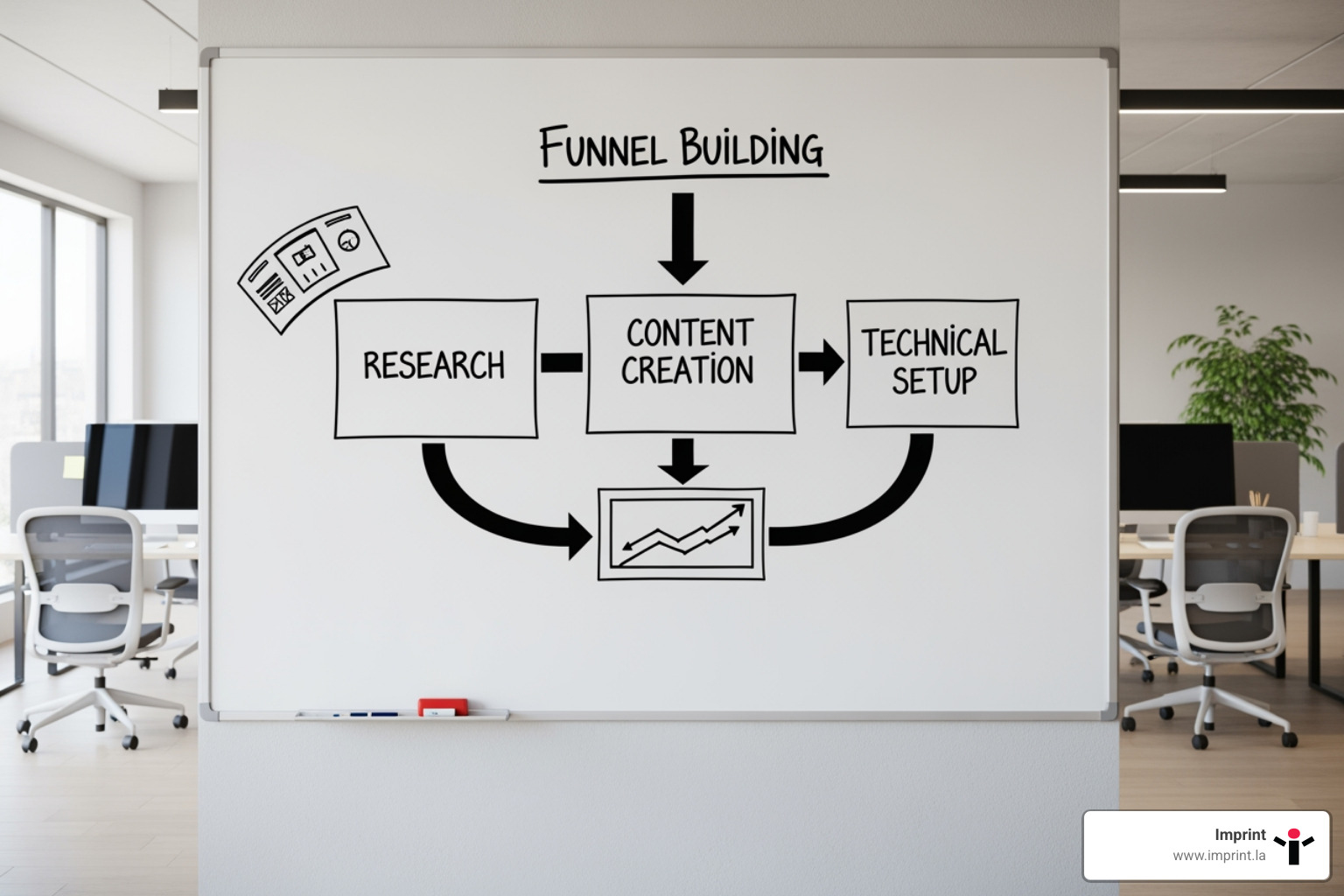
Building a funnel can feel like trying to solve a Rubik's cube in the dark, but it’s actually a very logical process. We follow a specific workflow to ensure no lead falls through the cracks.
Identifying Your Target Audience and Buyer Personas
You can’t design a funnel if you don’t know who is walking through it. We start by defining an Ideal Customer Profile (ICP). This goes beyond basic demographics like age or location. We dig into "zero-party data"—the information customers intentionally share with us—to understand their deepest pain points and fears.
Research shows that companies using detailed buyer personas see a 56% increase in high-quality leads and a staggering 73% boost in conversions. If you're a real estate agent in Beverly Hills, your persona isn't just "someone buying a house"; it's "a first-time luxury buyer worried about interest rates and neighborhood appreciation." When you know that, you can build a strong brand that speaks their language.
Creating Irresistible Lead Magnets for Every Stage
A lead magnet is the "ethical bribe" you offer in exchange for a prospect's contact information. To make this work, the value exchange must feel fair.
- Awareness Stage: Checklists or "How-to" guides work best here.
- Consideration Stage: Interactive ROI calculators or webinars provide deeper value.
- Conversion Stage: Free trials or personalized audits move the needle.
For example, an eSIM provider might offer a "Global Travel Packing Checklist" to attract travelers (TOFU), then offer a "Data Usage Calculator" (MOFU) to help them choose a plan. This transition is a core part of what email marketing is and how to get it right.
Optimizing Lead Generation Funnel Design for Maximum Conversions
Once the skeleton of your funnel is built, it's time to add the muscle. Optimization is the difference between a 1% conversion rate and a 15% conversion rate.
| Landing Page Element | Impact on Conversion | Why it Matters |
|---|---|---|
| Social Proof | High (+34%) | Testimonials build instant trust. |
| Single CTA | Medium | Reduces "analysis paralysis" for the user. |
| Mobile Speed | Critical | 96% of visitors leave if a page takes too long to load. |
| Benefit-Driven Copy | High | Tells the user "what's in it for me." |
As a user experience design company, we know that the visual flow of your landing page is just as important as the copy. Landing pages with social proof, for instance, convert up to 34% higher.
Designing High-Converting Landing Pages and Forms
The landing page is the "boarding point" of your funnel. If the boarding process is difficult, people will just stay at the station. We focus on:
- CTA Placement: Your call-to-action should be "above the fold" and impossible to miss.
- Form Friction: Only ask for what you absolutely need. Every extra field you add to a form can decrease conversions.
- Mobile Optimization: In Los Angeles, everyone is on their phone. If your funnel doesn't look perfect on an iPhone, you're losing money.
- Benefit-Driven Copy: Instead of saying "We provide SEO," say "Get 93% more organic traffic this year."
This data-driven approach is exactly how we manage data-driven Google Ads to ensure every click has the best chance of converting.
Leveraging AI and Automation for Lead Scoring in Lead Generation Funnel Design
Not all leads are created equal. Some are just "kicking tires," while others are ready to buy right now. This is where AI and automation come in. By implementing lead scoring, we assign points to prospects based on their behavior—like opening an email, visiting a pricing page, or downloading a guide.
A Marketing Qualified Lead (MQL) might have a score of 50, while a Sales Qualified Lead (SQL) has a score of 100 and gets automatically routed to your sales team. Using our favorite marketing automation tools, we can set up behavioral triggers that send the right message at the exact right time, without you lifting a finger.
Nurturing and Tracking Your Performance Marketing Leads
The "fortune is in the follow-up." Since 96% of website visitors aren't ready to buy on their first visit, you need a way to stay top-of-mind.
Essential Metrics to Measure Lead Generation Funnel Design Success
You can't improve what you don't measure. We track four key metrics to ensure our lead generation funnel design is performing:
- Conversion Rate: The percentage of visitors who become leads. An average rate is 5%-15%, but we always aim higher.
- Cost Per Lead (CPL): How much you're paying to acquire one contact.
- Funnel Velocity: How fast a lead moves from awareness to conversion.
- ROI/ROAS: The ultimate metric. For every dollar spent, how many dollars are coming back? At Imprint, our data-backed strategies deliver a 3.8x average ROAS.
Understanding these metrics is one of the seven ways a CRM can increase software sales and general business growth.
Driving High-Quality Traffic to the Top of the Funnel
A perfect funnel is useless if no one sees it. We use a multi-channel approach to drive "high-intent" traffic.
- Google Ads: Capturing people actively searching for your solution.
- Meta Ads: Using advanced targeting to find your audience on Facebook and Instagram. For e-commerce brands, Instagram ads are often the primary driver of top-funnel awareness.
- SEO: Building long-term, "free" traffic by answering the questions your audience is asking.
Frequently Asked Questions about Lead Funnels
What is the difference between a lead funnel and a sales funnel?
A lead funnel focuses specifically on the top and middle stages—attracting strangers and qualifying them into leads. A sales funnel handles the entire journey, including the final purchase and post-purchase loyalty. Think of the lead funnel as the "recruitment" phase and the sales funnel as the "closing" phase.
How do you identify the best lead magnet for your audience?
The best lead magnet solves a specific, urgent problem for your persona. If you're unsure, look at your most popular blog posts or common customer questions. If people keep asking "How much does a renovation cost?", an "Instant Renovation Quote Calculator" is your best lead magnet.
What are the most common mistakes in lead funnel design?
The biggest mistake is "gating" the value too early. If you ask for an email before showing the user why they should trust you, they'll bounce. Other mistakes include having too many CTAs, slow-loading pages, and failing to follow up within the first 24-48 hours.
Conclusion
Building a high-performing lead generation funnel design isn't a "set it and forget it" project. It’s a living system that requires constant tweaking, testing, and data analysis. In a competitive market like Los Angeles, Santa Monica, or Beverly Hills, a mediocre funnel is a recipe for wasted ad spend.
At Imprint, we specialize in taking the guesswork out of performance marketing. Our data-backed strategies consistently deliver a 3.8x average ROAS by aligning creative excellence with technical precision. We don't just want to give you more leads; we want to give you a system that scales your business predictably.
Ready to turn your website into a lead-generating machine? Work with a premier PPC/SEM Agency and let’s build a funnel that actually performs.
